







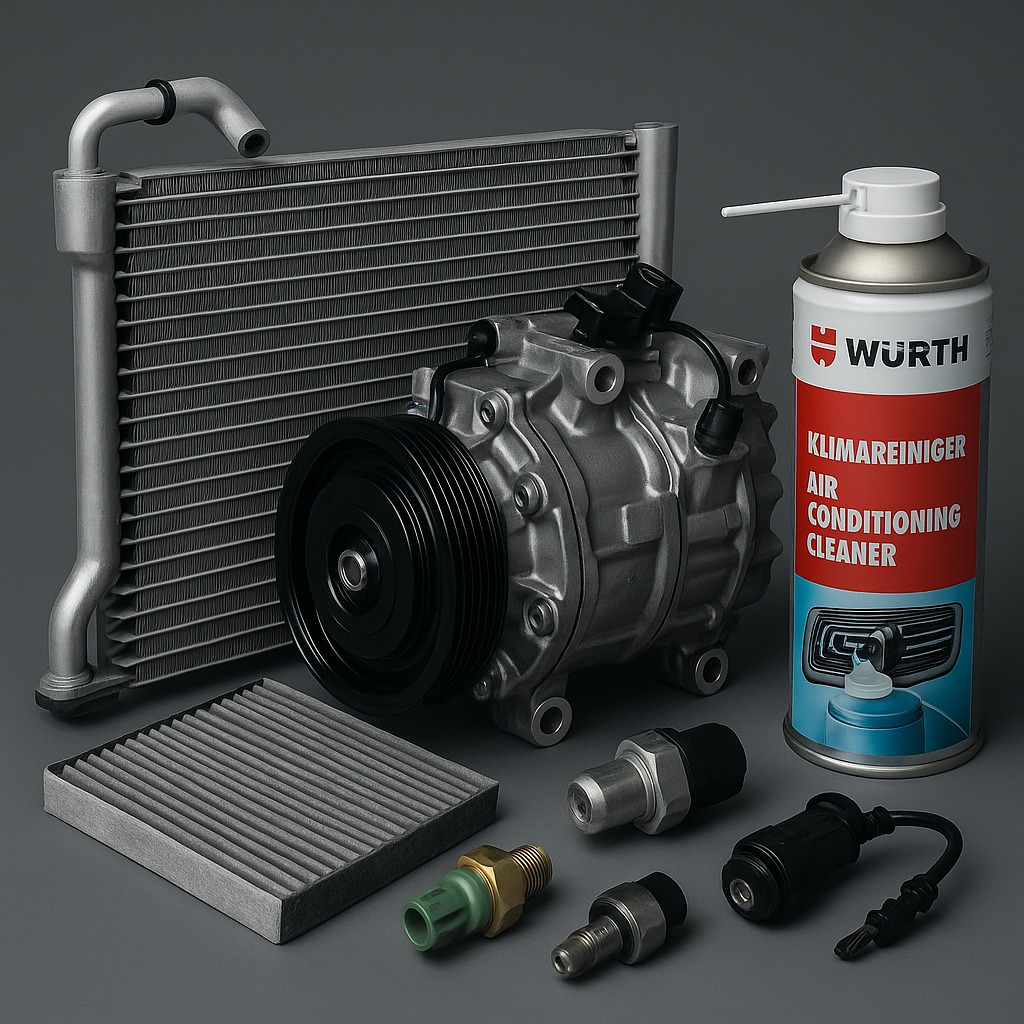
Car Air Conditioning and Ventilation – How to Maintain Performance and Hygiene
Car Air Conditioning and Ventilation – How to Maintain Performance and Hygiene
Car air conditioning is now standard equipment and significantly improves driving comfort. But clean and efficient vehicle ventilation is about more than convenience – it also affects health and safety. A neglected air-conditioning system can become a breeding ground for bacteria and fungi, while an unserviced compressor or faulty sensors can lead to expensive repairs. Here is how to care for the system so it can work reliably for years.
Air-conditioning hygiene – why is it so important?
Fungi and mould can quickly develop in the damp environment of the air-conditioning evaporator. The result can be an unpleasant smell in the cabin, allergies and respiratory irritation.
? Driver tip: disinfect the air-conditioning system at least once a year, preferably in spring. Foam treatment, ozone treatment or ultrasonic cleaning can be used. Professional servicing with direct access to the evaporator is usually the most effective method.
? In addition to the evaporator, the air-conditioning condenser also plays a key role. Dirt or damage reduces cooling efficiency and places additional load on the compressor. Regular condenser cleaning and leak checks are therefore important.
Cabin filter – the first line of defence
The cabin filter removes dust, pollen and other contaminants from the air. A clogged filter can cause:
- fogged windows,
- reduced airflow,
- the spread of bacteria and mould.
? Buying tip: replace the cabin filter every 15,000–20,000 km or once a year. Activated-carbon filters are a good choice because they also trap odours and harmful gases.
? Antibacterial filters and filters with active silver are also worth considering, especially for allergy sufferers and people who are sensitive to dust.
Air-conditioning compressor – the heart of the system
The compressor circulates the refrigerant. Compressor failure is one of the most expensive air-conditioning faults. Typical symptoms include no cooling, loud operation and metallic noises.
? Driver tip: monitor the refrigerant level and the amount of oil in the system. Insufficient lubrication is one of the main causes of compressor seizure. If you notice oil leaks on the lines or around the compressor clutch, have the system inspected immediately.
? Also pay attention to the compressor's electromagnetic clutch. If it fails, the air conditioning cannot engage. It is a relatively inexpensive component to repair, but it is essential to proper system operation.
Sensors in the air-conditioning system
Modern systems use a range of air-conditioning sensors, including temperature, pressure and sunlight sensors. A failure of any of them can cause:
- the air conditioning to switch off,
- uneven airflow,
- fault messages in the onboard computer.
? Buying tip: expensive dealership parts are not always necessary. Many air-conditioning sensors are available as high-quality aftermarket replacements at a lower price.
? One often-overlooked component is the humidity sensor, which helps control window demisting. A fault can result in persistent fogging inside the vehicle.
Regular air-conditioning service – what should it include?
A professional air-conditioning service should include:
- replacing or topping up the refrigerant and system oil,
- checking the system for leaks,
- replacing the cabin filter,
- disinfecting the evaporator.
? Driver tip: service the air conditioning every 12–18 months. This is not only about cooling performance – neglected maintenance can damage the compressor and lines.
? The system also contains a receiver-drier, whose job is to absorb moisture. It should be replaced every few years because a worn drier can accelerate corrosion of pipes and aluminium components.
Typical symptoms of air-conditioning and ventilation faults
- no cooling despite the air conditioning being switched on,
- loud compressor operation,
- an unpleasant smell from the vents,
- fogged windows even with the air conditioning running.
? Tip: if cooling performance drops, do not delay servicing. Running the system with too little refrigerant can cause damage. Topping up the refrigerant is much cheaper than replacing the compressor.
? Intermittent operation of the radiator fans should also be added to the list of warning signs. These fans remove heat from the condenser. If they fail, the system can overheat quickly and the air conditioning may switch off.
How to care for air conditioning and ventilation every day
- Run the air conditioning even in winter to help keep the compressor and seals in good condition.
- Switch it on at least once a month, even if only for a few minutes.
- After driving in hot weather, switch the air conditioning off a few minutes before turning off the engine. The fan can then dry the evaporator and reduce mould growth.
- Replace the cabin filter regularly and clean the air vents.
? Practical tip: if your windows fog up, the cause may be a dirty cabin filter rather than a ventilation fault. Replacing it is an inexpensive way to improve visibility and safety.
? Drivers often forget that air conditioning works together with the ventilation system. Regularly cleaning the air ducts and checking control flaps, such as the recirculation flap, helps prevent faults and improves comfort.
Summary
An efficient car air-conditioning system is not only about comfort on hot days but also about the health and safety of passengers. Regular cabin-filter replacement, compressor checks, sensor servicing and system disinfection help ensure reliable operation and prevent the system from becoming a health hazard.
Remember – regular servicing and proven car parts are an investment that pays off.