




Comparison of Popular French Car Models
Comparison of Popular French Car Models
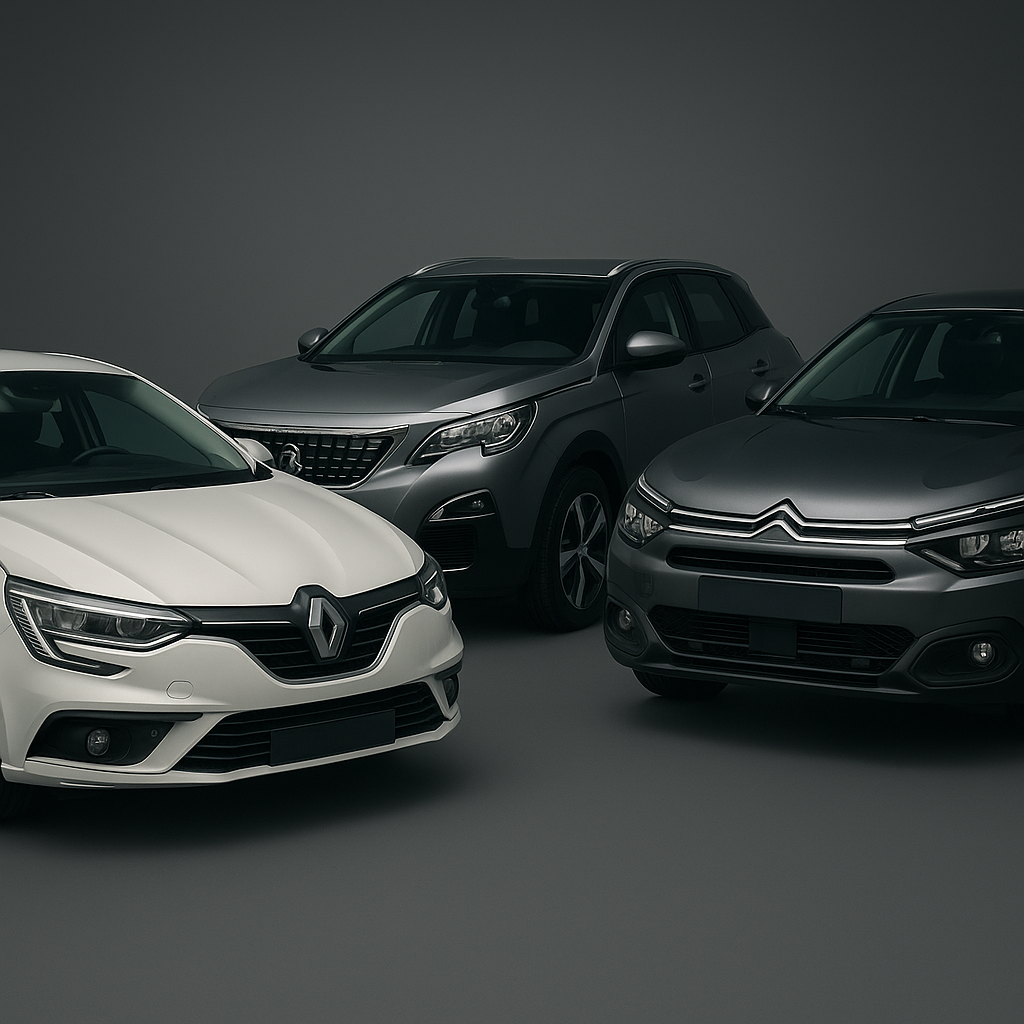
French cars have had a loyal following in Poland for many years. They are valued for driving comfort, modern engines and affordable replacement parts. Renault, Peugeot, Citroën and Dacia combine functionality with distinctive styling. But which models are really worth choosing if durability, running costs and parts availability matter?
In this article, we compare the most popular models from French brands in terms of both technology and ownership costs.
Renault – technology and versatility
Renault has long been associated with practical solutions and modern engines. Models such as the Megane, Clio, Scenic and Laguna are common on Polish roads in both TCe petrol and dCi diesel versions.
Advantages
- responsive and flexible dCi and TCe engines,
- good sound insulation and comfortable suspension,
- inexpensive replacement parts and wide availability,
- a large choice of used cars.
Disadvantages
- sensitive electronics, especially in older model years,
- typical problems with the EGR and turbocharger in diesel engines,
- oil changes are best carried out regularly every 10,000–12,000 km.
Advice: in the Renault Megane III and IV, the 1.5 and 1.6 dCi engines are particularly recommended — durable, economical and capable of covering more than 300,000 km. It is worth using low-ash oils (C4) and genuine fuel filters to protect the injection system.
Peugeot – comfort and refined diesel engines
Peugeot is known for well-tuned suspension, smooth gearbox operation and excellent diesel engines. The 308, 508, 3008 and Partner are among the most frequently chosen French vehicles in Poland.
Advantages
- very economical HDi and BlueHDi engines,
- pleasant steering and good cornering stability,
- solid interiors and comfortable seats,
- affordable aftermarket parts.
Disadvantages
- the rear suspension in some models may require frequent repairs,
- clutches in some 1.6 HDi versions can be relatively delicate,
- pressure sensors and EGR systems can be prone to contamination.
Tip: the Peugeot 308 with the 1.6 HDi engine is an excellent balance of performance and economy. Fuel consumption of around 4–5 l/100 km and straightforward mechanical servicing make it one of the strongest choices among compact French cars.
Citroën – comfort comes first
Citroën has always focused on ride comfort and soft suspension. Models such as the C4, C5, Berlingo and C3 have a distinctive character, with light steering and well-insulated cabins.
Advantages
- comfortable suspension, even on poor road surfaces,
- generous equipment in Exclusive versions,
- attractive interior design,
- inexpensive replacement parts and a wide choice of premium aftermarket components.
Disadvantages
- older models can suffer electrical faults,
- hydropneumatic suspension in the C5 requires regular servicing,
- ABS and ESP sensors can fail at high mileages.
Advice: the Citroën C4 works particularly well with the 1.6 HDi diesel and 1.6 VTi petrol engines. Turbocharged versions need more frequent oil changes but provide very good flexibility. Maintenance parts such as filters, brake pads and shock absorbers are inexpensive and widely available for these models.
Dacia – simplicity and low running costs
Dacia, part of the Renault Group, has become extremely popular in recent years. The Duster, Sandero, Logan and Dokker use simple, proven technology and offer exceptionally low servicing costs.
Advantages
- simple construction and inexpensive repairs,
- low-cost replacement parts are widely available,
- reliable 1.0 TCe, 1.5 dCi and 1.6 SCe engines,
- durable suspension.
Disadvantages
- less advanced safety systems,
- simpler interiors and weaker sound insulation,
- lower ride comfort than Renault or Citroën.
Advice: the Dacia Duster 1.5 dCi is one of the most frequently chosen SUVs in its class. With regular servicing, this engine can easily cover more than 350,000 km, while routine maintenance parts can cost up to 40% less than those for competing vehicles.
Comparison of the most popular models
| Brand / Model | Engine type | Fuel consumption (l/100 km) | Parts costs | Driving comfort | Durability |
|---|---|---|---|---|---|
| Renault Megane 1.5 dCi | Diesel | 4.5 | Low | ★★★★☆ | ★★★★☆ |
| Peugeot 308 1.6 HDi | Diesel | 4.3 | Medium | ★★★★☆ | ★★★★☆ |
| Citroën C4 1.6 VTi | Petrol | 6.5 | Low | ★★★★★ | ★★★☆☆ |
| Dacia Duster 1.5 dCi | Diesel | 5.0 | Very low | ★★★☆☆ | ★★★★★ |
| Renault Clio 1.0 TCe | Petrol | 5.2 | Low | ★★★★☆ | ★★★★☆ |
Conclusion: if comfort and equipment are your priorities, choose a Citroën or Peugeot. If durability and low running costs matter more, Renault or Dacia may be the better choice.
Servicing and parts costs – differences between brands
| Part type | Renault | Peugeot | Citroën | Dacia |
|---|---|---|---|---|
| Oil filter | PLN 25–40 | PLN 25–45 | PLN 25–45 | PLN 20–35 |
| Front brake pads | PLN 120–180 | PLN 130–190 | PLN 120–170 | PLN 100–150 |
| Brake disc set | PLN 250–400 | PLN 270–420 | PLN 260–380 | PLN 200–320 |
| Timing kit | PLN 450–650 | PLN 500–700 | PLN 480–700 | PLN 400–600 |
| Front shock absorber | PLN 200–300 | PLN 230–320 | PLN 210–310 | PLN 180–250 |
Buying advice: for French brands, premium aftermarket parts from manufacturers such as TRW, ATE, Sachs and Valeo are often the best choice. In many cases, these are effectively the same components supplied for original equipment (OEM), but sold in less expensive packaging.
Which French car should you choose?
- Renault Megane / Clio – an excellent compromise between price, durability and comfort.
- Peugeot 308 / 508 – modern design, excellent diesel engines and good performance.
- Citroën C4 / C5 – exceptional ride comfort, ideal for longer journeys.
- Dacia Duster / Logan – simplicity and low running costs, ideal for drivers focused on economy.
Final tip: whichever model you choose, French cars can be exceptionally durable when oil is changed regularly, suitable filters are used and engine ancillaries such as the EGR, turbocharger and DPF are properly maintained.
Summary
French brands offer a broad selection for every type of driver — from compact city cars such as the Clio, through family-oriented 308 and C4 models, to economical Dusters.
Renault and Dacia focus on practicality and inexpensive ownership.
Peugeot and Citroën emphasise comfort and modern solutions.
Whatever your preference, all of these cars share several strengths: reasonable replacement-part prices, good parts availability and strong durability when serviced according to the manufacturer's recommendations.