







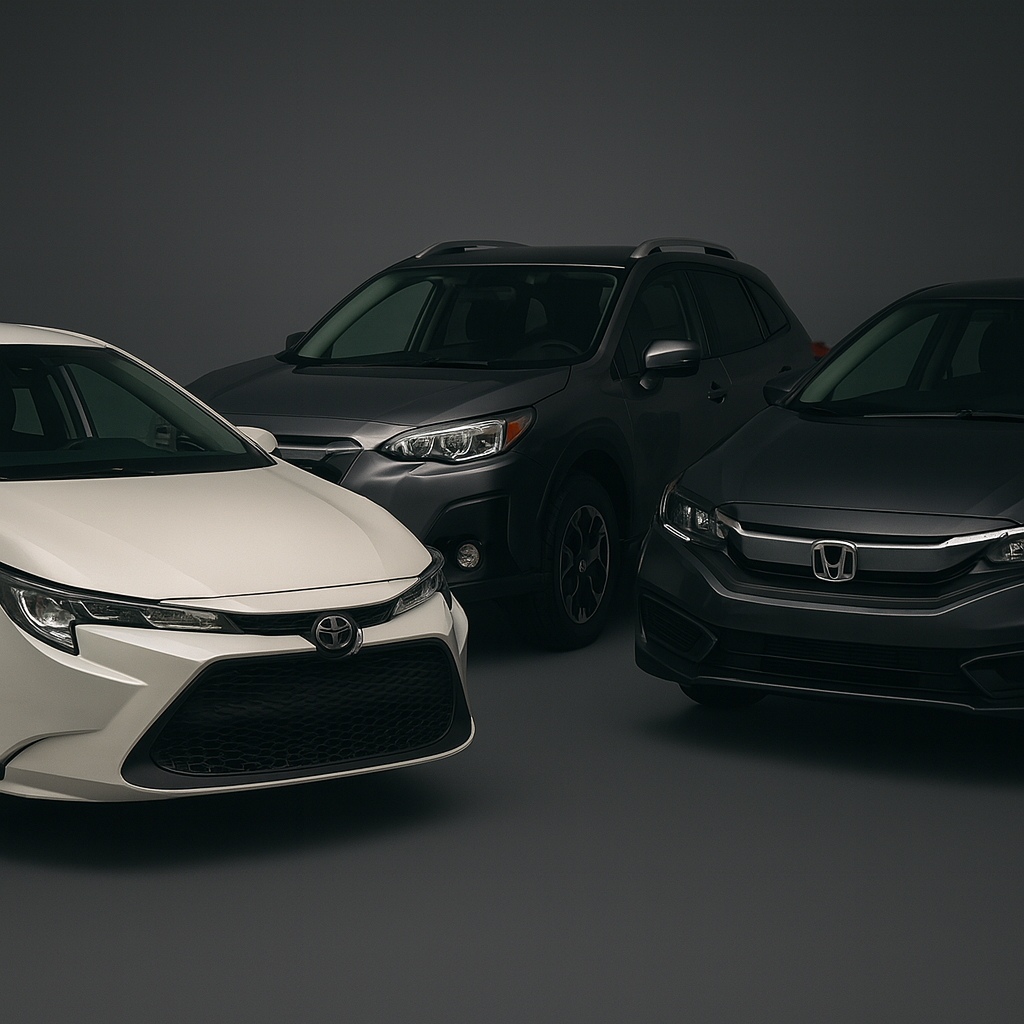
Comparison of Popular Japanese Car Models
Comparison of Popular Japanese Car Models
Japanese cars have long been regarded as some of the most reliable on the market. Drivers value them for durability, economical engines and very good availability of spare parts. Toyota, Honda, Mazda, Nissan and Subaru are brands known for high build quality and modern technology.
In this article, we compare popular Japanese models, looking at durability, running costs and value in everyday use.
Toyota – a leader in reliability and low fuel consumption
Toyota has ranked near the top of reliability surveys for years. Corolla, Yaris and RAV4 are among the most frequently purchased Japanese models in Poland.
Advantages
- durable VVT-i engines and hybrid systems,
- low fuel consumption,
- inexpensive and widely available parts,
- excellent automatic transmissions.
Disadvantages
- higher purchase price,
- weaker sound insulation in older models,
- base engine versions can feel underpowered.
? Advice: in a Toyota Corolla 1.8 Hybrid, change the oil more often than the manufacturer requires (every 10,000–12,000 km). This can help extend the life of the engine and e-CVT transmission.
Honda – responsive engines and sporty character
Honda is famous for high-revving VTEC engines and excellent handling. The Civic and CR-V have a reputation for exceptional durability.
Advantages
- excellent performance from i-VTEC engines,
- very good manual gearboxes,
- durable suspension,
- high resale value.
Disadvantages
- chassis parts can cost more than for Toyota,
- turbo engines require good-quality oil,
- higher fuel consumption during dynamic driving.
? Tip: the Honda Civic 1.8 i-VTEC is one of the most durable petrol engines in its class — an excellent choice for drivers covering high mileages.
Mazda – modern design, quality and SkyActiv engines
Mazda models stand out for their styling, excellent handling and refined operation. The 3, 6 and CX-5 are particularly popular.
Advantages
- economical and durable SkyActiv engines,
- good cabin sound insulation,
- excellent handling,
- high interior quality.
Disadvantages
- older cars can be prone to corrosion,
- body panels can be more expensive than competitors' parts,
- few conventional turbo petrol engines, as many units are naturally aspirated.
? Advice: the Mazda 3 2.0 SkyActiv is an excellent compromise between performance and durability — these engines do not particularly like repeated short journeys, so avoid using the car exclusively for very short city trips.
Nissan – practical and economical models
Nissan is strongly associated with compact SUVs. The Qashqai and X-Trail are among the most popular family cars in Poland.
Advantages
- inexpensive maintenance parts,
- wide model range,
- simple and affordable servicing,
- comfortable suspension.
Disadvantages
- the 1.2 DIG-T engine can suffer from oil consumption,
- weaker sound insulation in the Micra and Note,
- some model years have relatively delicate electronics.
? Tip: the 1.6 and 2.0 petrol engines are recommended — durable, capable of high mileages and inexpensive to maintain.
Subaru – safety and dependable AWD
Subaru is distinctive for its permanent all-wheel drive and boxer engines. The Forester and Outback are particularly well regarded by drivers in mountainous regions.
Advantages
- permanent S-AWD,
- high level of safety,
- reliable naturally aspirated engines,
- excellent traction in difficult conditions.
Disadvantages
- higher fuel consumption,
- more expensive engine parts,
- regular servicing is particularly important.
? Advice: the Forester 2.0 is one of the best choices for drivers who regularly face snow or off-road conditions – the car can handle very high mileages.
Comparison of the most popular models
| Brand / Model | Engine type | Fuel consumption (l/100 km) | Parts costs | Driving comfort | Durability |
|---|---|---|---|---|---|
| Toyota Corolla 1.8 Hybrid | Petrol / Hybrid | 4.5 | Low | ★★★★☆ | ★★★★★ |
| Honda Civic 1.8 i-VTEC | Petrol | 6.5 | Medium | ★★★★☆ | ★★★★★ |
| Mazda 3 2.0 SkyActiv | Petrol | 6.2 | Medium | ★★★★★ | ★★★★☆ |
| Nissan Qashqai 1.6 | Petrol | 6.8 | Low | ★★★☆☆ | ★★★★☆ |
| Subaru Forester 2.0 | Petrol AWD | 8.0 | Higher | ★★★★★ | ★★★★☆ |
? Conclusion: Toyota and Honda are the best choices for reliability. Mazda offers the best driving comfort, Nissan is the most economical, and Subaru provides the strongest sense of security and traction.
Servicing and parts costs – differences between brands
Japanese cars are known for low ownership costs, but there are still noticeable differences between brands.
| Part type | Toyota | Honda | Mazda | Nissan | Subaru |
|---|---|---|---|---|---|
| Oil filter | PLN 25–45 | PLN 30–50 | PLN 30–50 | PLN 25–45 | PLN 40–60 |
| Front brake pads | PLN 120–200 | PLN 150–220 | PLN 130–210 | PLN 120–190 | PLN 180–260 |
| Brake disc set | PLN 260–420 | PLN 300–450 | PLN 280–430 | PLN 250–400 | PLN 350–520 |
| Timing kit | PLN 450–700 | PLN 500–750 | PLN 480–740 | PLN 420–650 | PLN 600–900 |
| Front shock absorber | PLN 200–330 | PLN 230–350 | PLN 220–340 | PLN 200–320 | PLN 280–420 |
? Buying advice: premium aftermarket brands such as Denso, Aisin, KYB, Bosch and TRW are excellent for Japanese cars — many of them are OEM suppliers at a more attractive price.
Which Japanese car should you choose?
- Toyota Corolla / Yaris – ideal for anyone looking for a durable car for city use and longer trips.
- Honda Civic / CR-V – a great choice for drivers who value performance and reliability.
- Mazda 3 / CX-5 – modern styling and excellent driving dynamics.
- Nissan Qashqai / Micra – practical models that are inexpensive to maintain.
- Subaru Forester / Outback – the best option for more demanding drivers.
? Final tip: the best investment is regular servicing every 10,000–15,000 km and using reputable filters and oils that meet the manufacturer's specifications.
Summary
Japanese cars have long been known for outstanding durability and economical ownership. Toyota and Honda dominate reliability rankings, Mazda impresses with design and refinement, Nissan offers attractive parts prices, and Subaru provides excellent safety and traction.
Whatever model you choose, proper servicing and good-quality maintenance parts will help the car serve you for many years.