







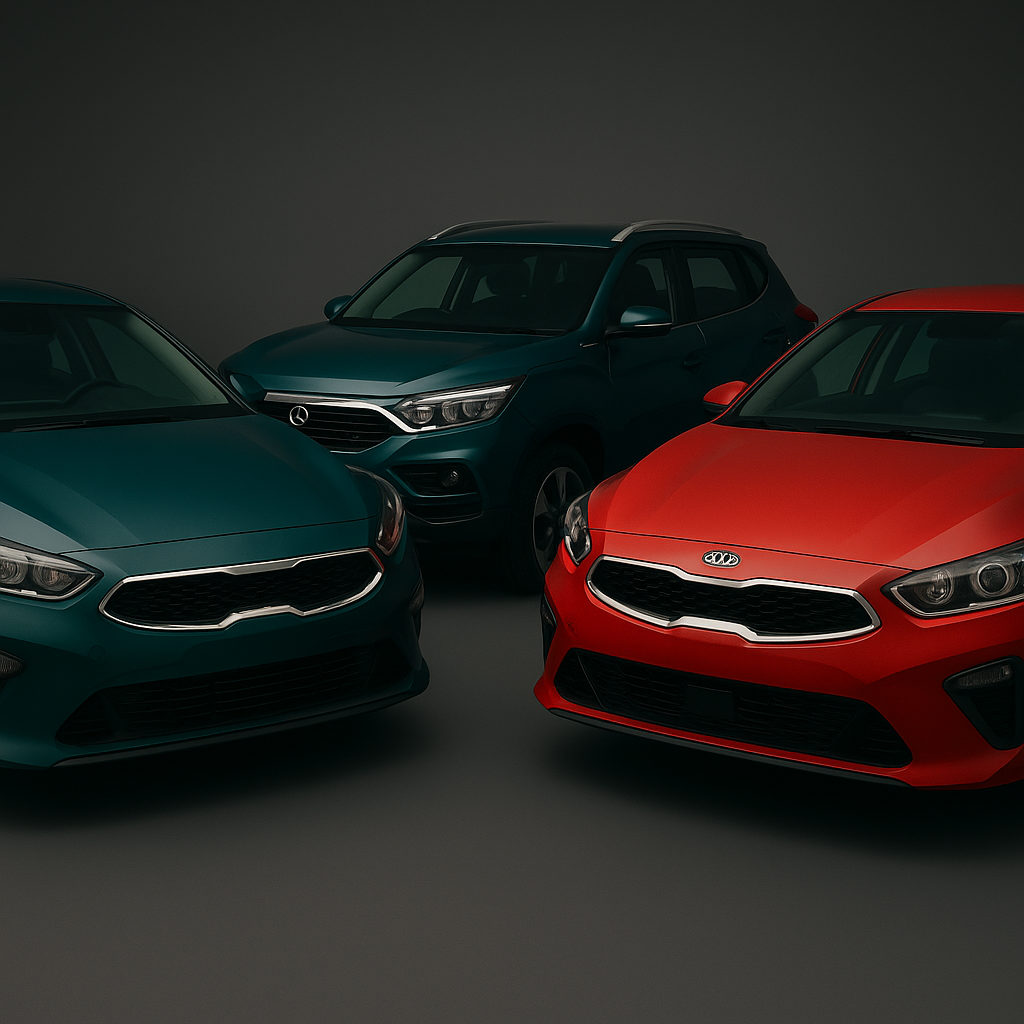
Comparison of Popular Korean Car Models
Comparison of Popular Korean Car Models
Korean cars have been gaining popularity for years thanks to an attractive price-to-quality ratio, modern technology and long warranty periods. Hyundai, Kia and SsangYong models are often chosen by drivers looking for reliable and well-equipped cars at a reasonable price.
In this article, we present a comparison of popular Korean car models, looking at performance, durability, running costs and value in everyday use.
Hyundai – reliability and modern technology
Hyundai is rapidly expanding its range, focusing on durable engines and generous equipment levels. The i30, Tucson and Elantra are among the most popular Korean cars in Poland.
Advantages
- durable MPi petrol engines and modern T-GDi units,
- high interior build quality,
- low fuel consumption,
- long warranty and good parts availability.
Disadvantages
- higher prices for newer models,
- some turbo engines are sensitive to oil quality,
- electronic systems should be serviced according to schedule.
? Advice: the Hyundai i30 1.6 CRDi is one of the most successful Korean diesels – durable, economical and inexpensive to maintain.
Kia – excellent value for money
Kia became well known for its 7-year warranty and very good equipment even in basic trim levels. The Ceed, Sportage and Rio are among the most popular Korean cars.
Advantages
- long warranty periods,
- low servicing costs,
- good 1.6 GDI and 1.4 T-GDi engines,
- solid automatic transmissions.
Disadvantages
- body parts are more expensive than for Hyundai,
- some GDI engines are prone to intake carbon build-up,
- firmer suspension in the Ceed and Sportage.
? Tip: the Kia Ceed 1.4 T-GDi is an excellent choice for the city – responsive, economical and inexpensive to run.
SsangYong – large, durable and mechanically simple
SsangYong is less popular, but is appreciated by drivers looking for larger SUVs or vehicles with simple and robust mechanicals. The Korando, Rexton and Tivoli stand out for their spacious interiors and attractive prices.
Advantages
- strong 2.0 and 2.2 diesel engines,
- simple, durable construction,
- inexpensive mechanical repairs,
- plenty of cabin space.
Disadvantages
- lower interior quality,
- higher fuel consumption,
- parts are less readily available than for Hyundai and Kia.
? Advice: the SsangYong Rexton 2.2 diesel is a very durable SUV – ideal for drivers who need a large and capable vehicle for work or off-road use.
Comparison of the most popular models
| Brand / Model | Engine type | Fuel consumption (l/100 km) | Parts costs | Driving comfort | Durability |
|---|---|---|---|---|---|
| Hyundai i30 1.6 CRDi | Diesel | 5.0 | Low | ★★★★☆ | ★★★★☆ |
| Kia Ceed 1.4 T-GDi | Turbo petrol | 6.2 | Medium | ★★★★☆ | ★★★☆☆ |
| SsangYong Korando 1.6 | Diesel | 6.8 | Low | ★★★☆☆ | ★★★★☆ |
| Hyundai Tucson 1.6 T-GDi | Turbo petrol | 7.0 | Medium | ★★★★☆ | ★★★★☆ |
| Kia Sportage 1.6 GDI | Petrol | 7.5 | Low | ★★★☆☆ | ★★★☆☆ |
? Conclusion: Hyundai offers the best balance between quality and running costs. Kia provides the longest warranty and generous equipment, while SsangYong is a good option for drivers who need lots of space and simple construction.
Servicing and parts costs – differences between brands
Korean cars are relatively inexpensive to maintain, but the differences between manufacturers are clearly noticeable.
| Part type | Hyundai | Kia | SsangYong |
|---|---|---|---|
| Oil filter | PLN 25–45 | PLN 25–50 | PLN 30–60 |
| Front brake pads | PLN 120–180 | PLN 130–190 | PLN 150–220 |
| Brake disc set | PLN 250–380 | PLN 270–400 | PLN 300–450 |
| Timing kit | PLN 450–650 | PLN 480–680 | PLN 520–750 |
| Front shock absorber | PLN 200–300 | PLN 220–330 | PLN 250–380 |
? Buying advice: good parts choices for Korean cars include Mobis (OEM), Bosch, Denso, KYB and TRW — they combine reasonable prices with very good durability.
Which Korean car should you choose?
- Hyundai i30 / Tucson – excellent quality, durable engines and low fuel consumption.
- Kia Ceed / Sportage – modern design, good performance and a long warranty.
- SsangYong Korando / Rexton – the best choice for drivers who need large SUVs with relatively simple engineering.
? Final tip: Korean cars are durable if you change the oil every 10,000–15,000 km and use reputable filters and good-quality fuel.
Summary
Korean brands offer modern, well-equipped models that are relatively inexpensive to run. Hyundai stands out for reliability, Kia for its excellent warranty and SsangYong for strong, simple construction.
Whatever you choose, regular servicing and good-quality parts will help a Korean car serve you well for many years.