







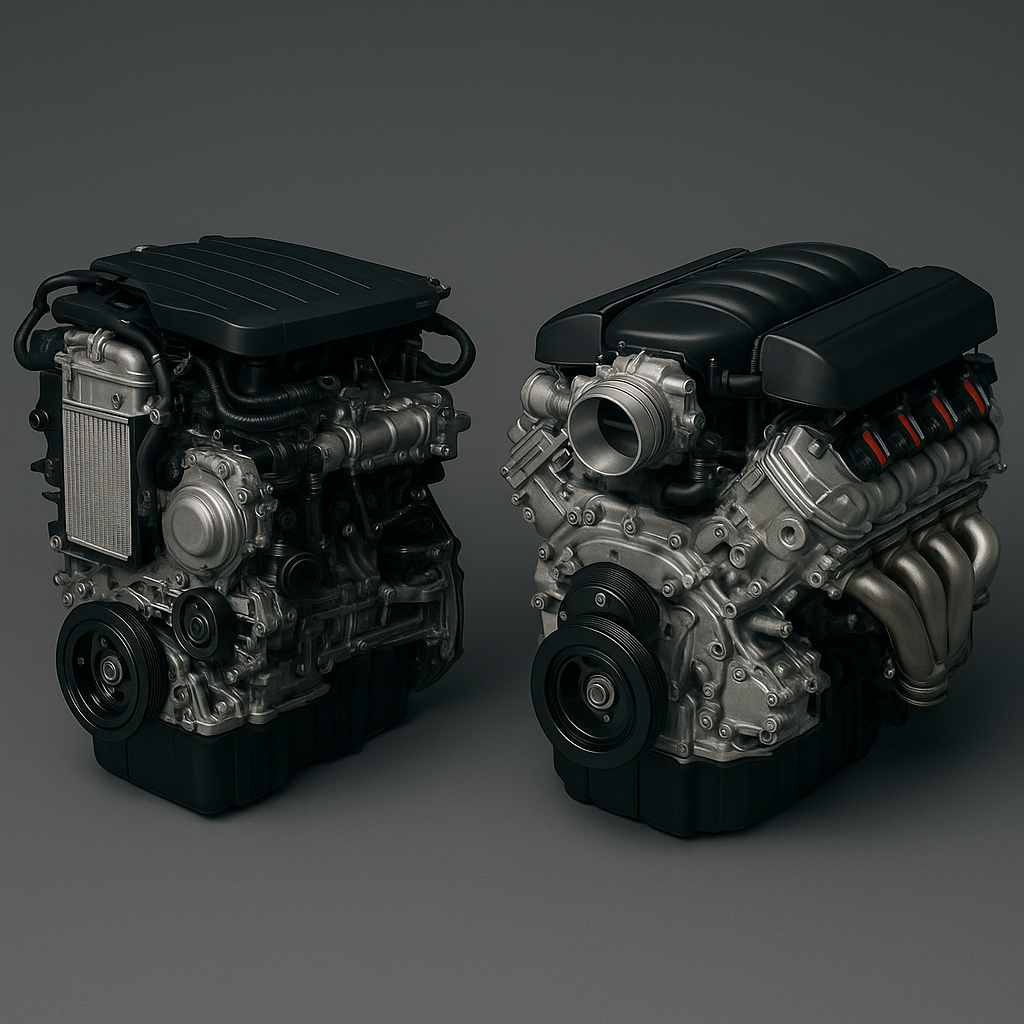
Diesel or Petrol – Differences in Design, Components and Running Costs
Diesel or Petrol – Differences in Design, Components and Running Costs
The choice between a diesel and a petrol engine has sparked debate among drivers for years. Each solution has its strengths and weaknesses – they differ not only in fuel consumption and performance, but also in construction, ancillary components and servicing costs. In this article, we provide a detailed comparison of both engine types, explain how to look after them, which maintenance parts are essential and when diesel or petrol is the better choice.
Petrol and diesel engine design – key differences
Petrol and diesel engines differ mainly in the way the air-fuel mixture is ignited. In a petrol engine, ignition is triggered by a spark plug, whereas in a diesel engine the air is compressed to very high pressure, causing the fuel to ignite spontaneously.
Construction differences
- A diesel has a higher compression ratio, a stronger engine block and pistons designed to withstand higher pressures.
- A petrol engine is lighter, quieter and capable of higher engine speeds.
- Diesels commonly use turbochargers and intercoolers, while petrol engines increasingly use turbocharging and direct injection systems such as TSI, GDI and TCe.
Advice: when replacing parts, always use components matched to the exact engine code – differences between petrol and diesel versions can affect even small items such as spark/glow plugs, seals and fuel-pressure sensors.
Engine ancillaries – turbo, injectors, EGR and DPF
In modern powertrains, ancillary components often have the greatest impact on reliability and ownership costs.
Diesel engine
- Turbocharger
- Common Rail injection system
- EGR valve (exhaust-gas recirculation)
- DPF/FAP particulate filter
These components help reduce fuel consumption and emissions, but they require regular maintenance and clean fuel.
Advice: repeated short journeys accelerate DPF clogging – every few thousand kilometres, it is worth giving the car a longer run that allows the filter to regenerate.
Petrol engine
- Ignition coils
- Iridium or platinum spark plugs
- Lambda sensor and catalytic converter
- Turbocharger and intercooler in turbocharged versions
Tip: in direct-injection engines such as TSI or GDI, periodic cleaning of the intake valves is recommended because they are prone to carbon build-up.
Maintenance and servicing – how to look after the engine
Both diesel and petrol engines require regular maintenance. However, they differ in service intervals and sensitivity to maintenance mistakes.
Engine oil and filters
- Diesel: change the oil every 10,000–15,000 km and use low-ash C3/C4 oils where specified.
- Petrol: change the oil every 15,000–20,000 km; correct viscosity and oil cleanliness are particularly important.
Advice: always replace the oil, fuel and air filters at the recommended intervals – clogged filters shorten the life of the turbocharger and fuel-injection system.
Fuel system
Diesel systems require greater precision – unit injectors and Common Rail injectors operate at extremely high pressure. Contamination in the fuel can lead to expensive failures. Petrol fuel systems are usually simpler and less sensitive, although direct-injection petrol engines also require good-quality fuel.
Typical failures and repair costs
Common diesel failures
- Worn injectors and turbocharger
- Clogged DPF/FAP
- Damaged EGR valve
- Dual-mass flywheel problems
- Fuel-system leaks
Common petrol-engine failures
- Worn ignition coils, spark plugs and catalytic converter
- Dirty fuel injectors
- Turbocharger failures in turbocharged versions
- Oil leaks from seals and gaskets
Buying advice: when replacing ancillary components, choose parts from reputable manufacturers such as Bosch, Denso, Valeo and Delphi. Very cheap replacements can shorten the life of the entire system.
Fuel consumption and running costs – which is more economical?
Diesel
- Lower fuel consumption (typically 4–6 l/100 km)
- High torque, ideal for long-distance driving
- Higher repair costs for components such as the DPF, injectors and turbocharger
Petrol
- Cheaper servicing and parts
- Better response on short journeys
- Higher fuel consumption (6–9 l/100 km), especially in the city
Tip: if you drive less than 15,000 km per year, petrol is often the better choice. If you regularly cover long distances, a diesel may prove more economical.
When should you choose diesel, and when petrol?
- Diesel: for drivers who cover long distances, tow trailers or spend a lot of time on motorways and open roads.
- Petrol: for city drivers, short journeys and less demanding use.
Advice: regardless of engine type, regular oil and filter changes, timely timing-belt replacement and maintaining a leak-free intake system are fundamental to trouble-free operation.
Summary
Diesel and petrol engines differ not only in fuel consumption, but also in design, ancillary equipment and repair costs. Diesel attracts drivers with economy on long journeys, while petrol offers simplicity and lower servicing costs. Whichever you choose, long service life depends on regular maintenance, good-quality oil, clean filters and proven automotive parts from a trusted supplier.