







How to Care for Your Car Engine
How to Care for Your Car Engine? Common Failures and Parts Worth Checking
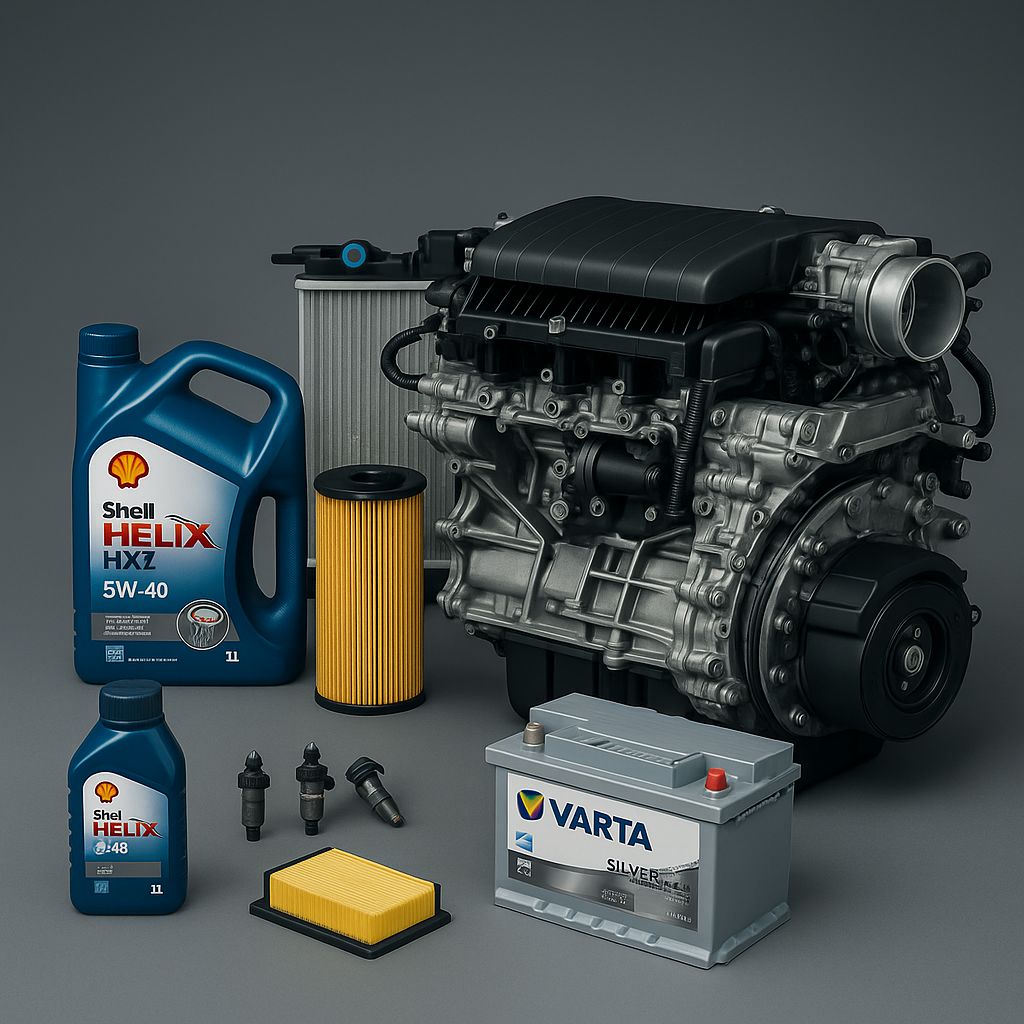
The engine is the heart of the car, and its condition directly affects driving comfort and safety. Every driver knows that service parts wear naturally and require regular replacement. Unfortunately, many owners postpone engine maintenance, which can eventually lead to expensive repairs. In this article, we explain how to care for the engine, which car parts fail most often and what to look for when buying replacements online.
Engine oil and filters – the foundation of engine longevity
Why is engine oil so important?
How often should engine oil and the oil filter be changed?
Engine oil performs three basic functions: it lubricates moving components, helps cool the engine and protects against corrosion. Failing to change it regularly causes the oil to lose its properties, increasing friction and accelerating wear of pistons, bearings and the crankshaft.
Most manufacturers recommend changing the oil every 10,000–15,000 km or once a year. The oil filter should always be replaced at the same time because it traps contaminants and small metal particles. Neglecting this basic service can eventually lead to engine seizure.
Air filter and fuel filter
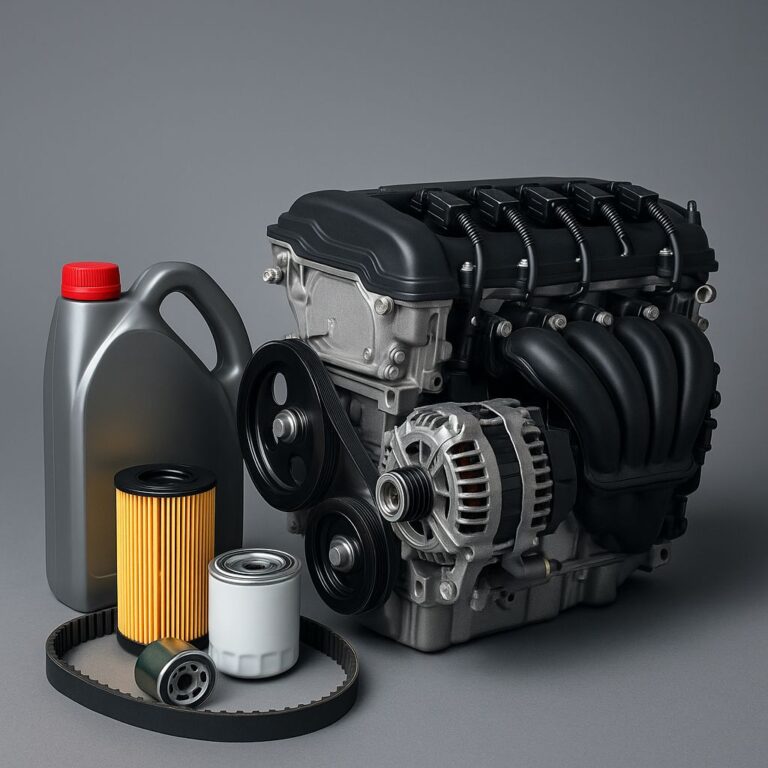
- The air filter supplies clean air to the combustion chamber. A dirty filter reduces power and can increase fuel consumption.
- The fuel filter traps contaminants from the fuel, protecting the injectors and fuel pump. Neglecting replacement often results in fuel-system problems.
? Buying tip: when choosing oil, check the vehicle manufacturer's specifications, such as VW 507.00 or ACEA C3. For filters, it is worth choosing proven brands such as Mann, Bosch or Mahle, which are known for good service life.
Ignition system – spark plugs and coils
Symptoms of worn spark plugs
Worn spark plugs can cause starting difficulties, hesitation or jerking while driving and uneven idling. Replacement is a simple and relatively inexpensive service that can significantly improve engine operation.
Ignition coil – common problems
A faulty ignition coil can cause a loss of power and misfires. Driving with a faulty ignition system can damage the catalytic converter. ? Buying tip:
- Standard spark plugs should generally be replaced every 20,000–30,000 km.
- Iridium and platinum plugs can last up to 100,000 km and are often worth the extra cost.
- When buying ignition coils, avoid very cheap products from unknown manufacturers because they often fail sooner than proven replacements.
Cooling system – radiator, thermostat and water pump
How can you recognise a cooling-system fault?
Common symptoms include rising engine temperature, the smell of coolant inside the cabin or wet patches under the vehicle. A cooling-system failure can lead to engine overheating and even cylinder-head damage.
Key components: thermostat and radiator
- The thermostat regulates coolant flow. If it sticks, the engine may either overheat or fail to reach its correct operating temperature.
- The radiator dissipates heat. Leaks are one of the most common cooling-system problems.
Water pump
The water pump circulates coolant through the system. It is often replaced together with the timing belt.
? Buying tip: choose coolant that meets the manufacturer's recommendations, such as G12 or G13. When buying a radiator, make sure its catalogue number matches your vehicle model – the differences can be subtle but important.
Fuel system – fuel filter, pump and injectors
Symptoms of fuel-pump failure
A faulty fuel pump can cause a loss of power, difficulty starting or the engine stalling while driving. It is one of the more expensive fuel-system faults.
How to care for fuel injectors
Fuel injectors are precision components and do not tolerate contaminated fuel well. Filling up at reputable stations and replacing the fuel filter regularly can significantly extend their life.
? Buying tip:
- Avoid very cheap fuel filters – poor filtration can damage the injectors.
- If the fuel pump is being rebuilt, use a reputable workshop and proven or original repair kits.
Starter battery and electrical system
Why is the battery such a common cause of problems?
The starter battery provides the power needed to start the engine. Its performance can fall significantly in winter, which is why starting problems are especially common in cold weather.
Alternator and starter motor
- The alternator charges the battery while driving. Failure causes voltage to drop and can eventually immobilise the car.
- The starter motor turns the engine during starting. Worn brushes or a faulty starter drive are typical problems.
? Buying tip:
- When choosing a battery, pay attention to capacity (Ah) and cold-cranking current (A).
- For cars with a Start-Stop system, choose an AGM or EFB battery.
- Factory-remanufactured alternators and starter motors can offer a good balance between price and durability.
Timing belt and engine components
Timing belt – the silent threat
The timing belt synchronises piston and valve movement. If it snaps, the valves may collide with the pistons, causing very expensive engine damage. Replacement is typically recommended every 60,000–120,000 km depending on the model.
Valves, pistons and cylinder head
A broken timing belt can damage the pistons, valves and cylinder head. It is one of the most expensive failures a driver can face. ? Buying tip:
always buy a complete timing kit including the belt, rollers, tensioner and water pump. This prevents a new belt from being paired with old, worn components.? Additional components worth remembering
Turbocharger
Modern engines are often equipped with turbochargers that increase power but depend on regular oil changes. Fault symptoms can include whistling during acceleration, loss of power and exhaust smoke.
EGR valve
The exhaust-gas recirculation system reduces emissions, but the EGR valve can become clogged with soot over time. The results may include uneven engine operation, loss of power and, in some cases, limp mode.
Sensors and electronics
The engine works with many sensors, including temperature sensors, oil-pressure sensors, airflow meters and oxygen sensors. A failure of a single component can trigger the “Check Engine” warning light.
Covers and housings
Do not forget smaller components such as engine covers, battery housings and air-filter housings. They protect sensitive parts from dirt and mechanical damage.
How to extend engine life – practical advice
- Change the oil and all filters regularly.
- Buy fuel from reputable stations.
- Do not postpone timing-belt replacement.
- Take care of the starter battery in winter – avoid repeated short trips and recharge it when necessary.
- Check operating-fluid levels regularly, including engine oil, coolant and brake fluid. ? Online shopping:
- always check the part number and reviews from other buyers. Genuine parts are more expensive, but in many cases good-quality aftermarket products, including parts from OE suppliers, can provide comparable quality at a lower price.
Summary
Caring for the engine is about more than changing oil and filters regularly. It also includes checking the ignition, cooling, fuel and electrical systems and replacing the timing belt at the correct interval. Regular maintenance and timely replacement of worn car parts are among the best investments in trouble-free operation and driving safety.