







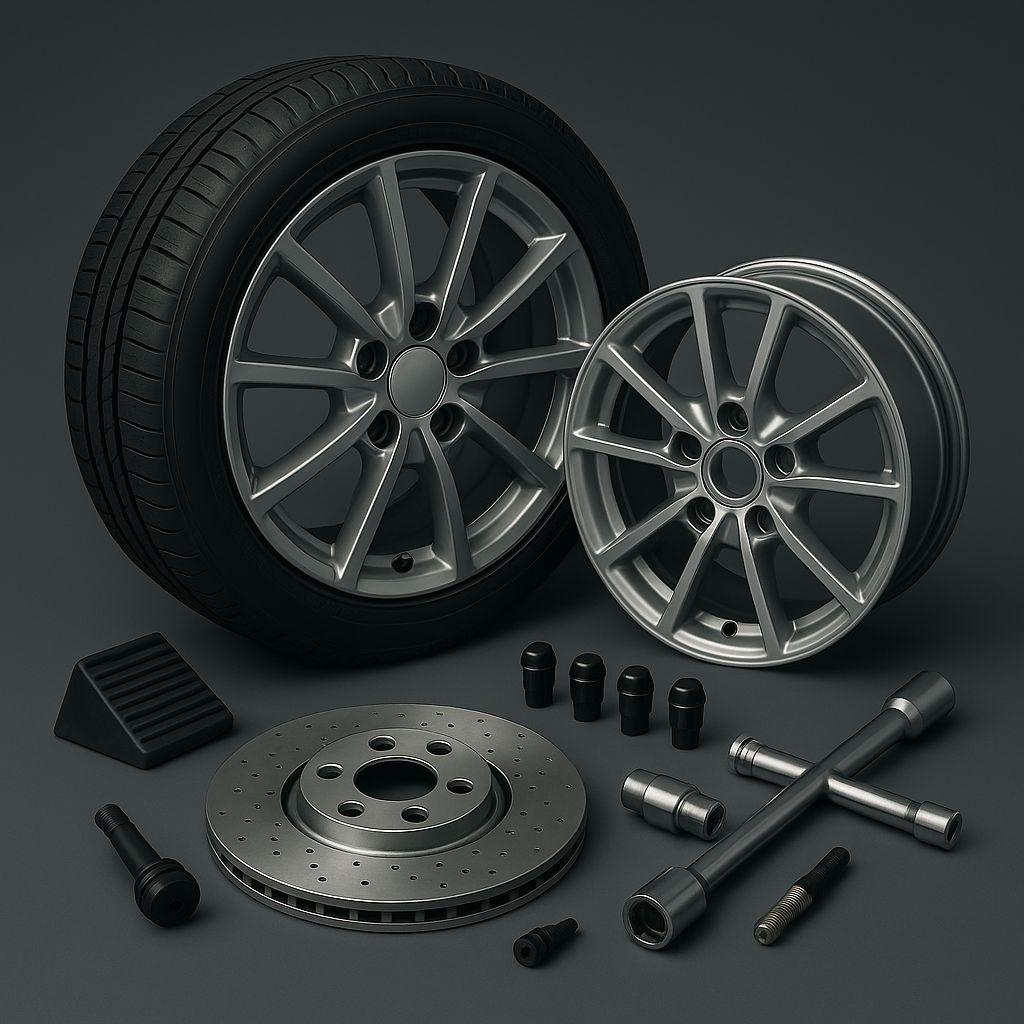
Wheels and Rims – How to Choose the Right Ones and Keep Them in Good Condition
Wheels and Rims – How to Choose the Right Ones and Keep Them in Good Condition
Wheels and rims have a major impact on driving safety, comfort and the appearance of a car. Correctly selected steel or alloy wheels, suitable summer, winter or all-season tyres, and proper care of the tyres and TPMS pressure sensors help the vehicle handle confidently in all conditions. Find out which solutions to choose and how to look after your wheels every day.
Steel or alloy wheels – which should you choose?
Steel wheels are cheaper, durable and less sensitive to impacts, which makes them particularly suitable for winter. Their disadvantages are greater weight and less attractive styling. Alloy wheels are lighter, improve the appearance of the car and dissipate brake heat more effectively. However, they are more expensive and can be damaged more easily by kerbs. ? Advice for drivers: steel wheels can be a practical choice in winter because they cope well with harsh conditions and road salt. In summer, alloy wheels can improve appearance and driving feel. ? Also pay attention to wheel specifications such as bolt pattern, centre-bore diameter and ET (offset). Incorrect specifications can cause the tyre to rub against the wheel arch or negatively affect handling.Summer, winter and all-season tyres – which are best?
Summer tyres
They provide the best grip on dry and wet roads in warmer conditions.Winter tyres
Thanks to a dedicated rubber compound and tread design, they perform best below around 7°C and provide better grip on snow and ice.All-season tyres
A versatile solution for drivers who mainly drive in urban areas and in moderate weather conditions. ? Advice for drivers: if you travel a lot or live in an area with severe winters, a separate set of summer and winter tyres is usually safer than all-season tyres and can also extend tyre life. ? It is also worth checking tyre homologation or manufacturer approval – car manufacturers sometimes approve specific tyre models for a vehicle's characteristics. Run-flat tyres are also increasingly common and allow limited driving after a puncture.Snow chains and studs – extra winter support
Snow chains increase grip on snow-covered roads and are mandatory in certain countries or mountain areas during winter conditions. Studded tyres are used in Scandinavia, but their use on public roads is prohibited in Poland.? Advice: if you are planning a trip to the mountains or abroad, check local regulations – failing to carry required chains can result in a fine.
? Textile traction devices, often called snow socks, are also available. They are easier to fit than traditional chains but generally less durable.
Wheel servicing – balancing and alignment
Unbalanced wheels can cause steering-wheel vibration and accelerate wear of tyres and suspension components.? Advice: balance the wheels whenever tyres are changed and whenever you notice vibration through the steering wheel.
It is also worth checking wheel alignment – incorrect geometry can cause the car to pull to one side and produce uneven tyre wear.
? Tyre rotation is another useful practice. Moving tyres between front and rear positions every 10,000–15,000 km can help extend the life of the set.
Tyre-pressure monitoring sensors (TPMS)
The TPMS system monitors tyre pressure and warns the driver when pressure drops. It is not just convenient – it is also an important safety feature.
? Buying advice: when replacing wheels or tyres, check compatibility with the TPMS system. Not every wheel and sensor combination is compatible, and the wrong choice can trigger error messages.
? TPMS comes in two main types: direct, with sensors in the wheel valves, and indirect, which analyses data from ABS/ESP. With direct TPMS, valve and sensor servicing may be required during tyre replacement.
How should you look after wheels and tyres every day?
Check tyre pressure regularly,Monitor tread depth (the legal minimum in many places is 1.6 mm, although replacement at around 3–4 mm may be advisable depending on conditions),
Wash wheels and tyres to remove salt and dirt and reduce corrosion,
Store tyres correctly – preferably upright or on dedicated racks depending on whether they are mounted,
Change tyres seasonally when appropriate to maintain full grip.
? Practical tip: after winter, wash steel wheels thoroughly because road salt accelerates corrosion.
? When storing tyres, keep them away from direct sunlight and excessive heat – a dry, cool location is best.
Summary
Wheels and rims have a major impact on vehicle safety, handling and appearance. By choosing the right steel or alloy wheels, selecting suitable summer, winter or all-season tyres and keeping the wheels balanced and the TPMS system working correctly, you improve both comfort and safety in all conditions.Remember – good tyres and well-maintained wheels are an investment that pays off.