



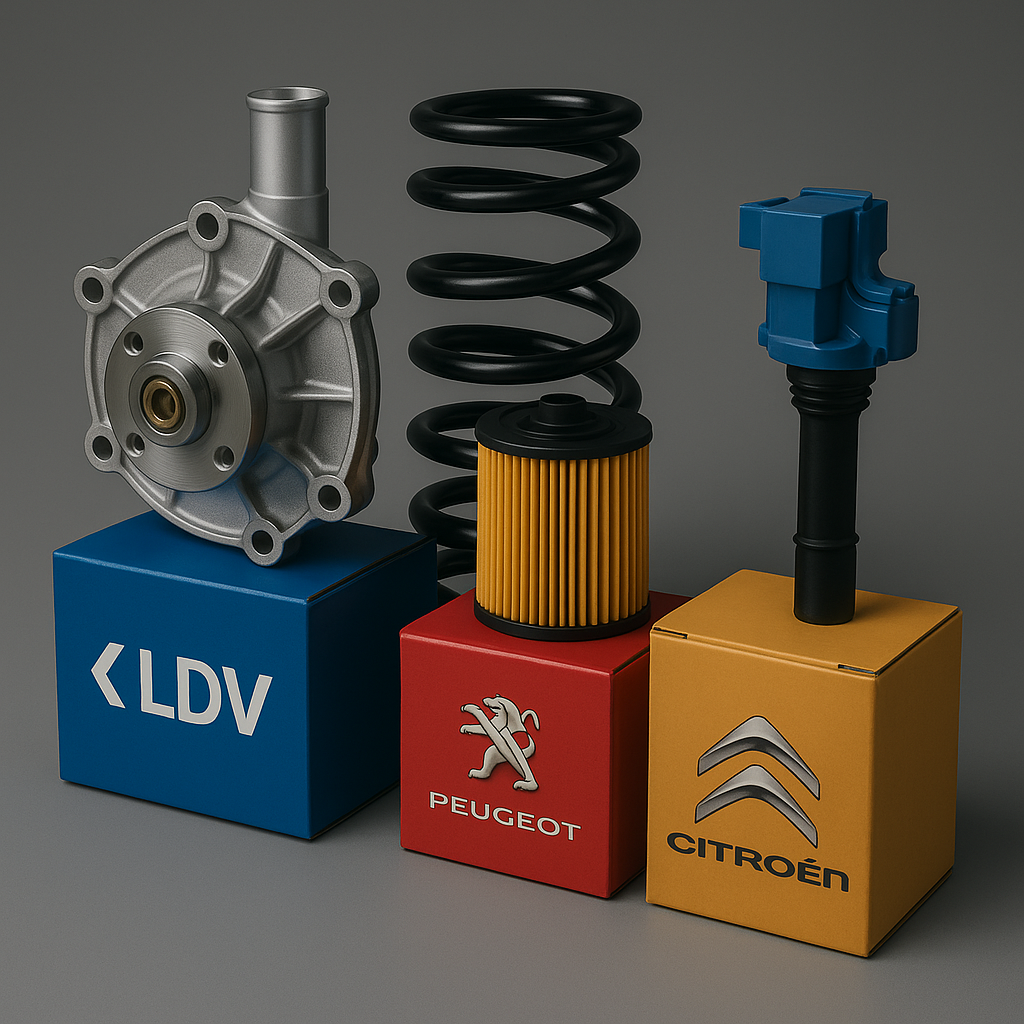
Not Just for French Cars! See Where Renault, Peugeot and Citroën Parts Also Fit
Not Just for French Cars! See Where Renault, Peugeot and Citroën Parts Also Fit
French brands — Renault, Peugeot, Citroën and Dacia — have for years supplied not only cars, but also components that can be found in vehicles from many other manufacturers.
This is the result of cooperation between automotive groups, joint projects and shared technology platforms. In practice, it means that many French parts also fit selected Opel, Nissan, Fiat, Ford and Volvo models.
In this article, we explain why this happens, which components are shared, and how you can use this knowledge to save money on replacement parts without sacrificing quality.
Shared platforms and engines – why do French parts fit other brands?
Today's automotive market is built on technological cooperation between manufacturers.
Companies work together to reduce design and production costs. As a result, they share engines, gearboxes, suspension systems and electronic components across vehicles from different brands, not only French ones.
Examples of cooperation:
- Renault + Nissan + Dacia – shared dCi and TCe engines, gearboxes and electronics.
- PSA (Peugeot, Citroën) + Ford + Volvo – shared 1.6 HDi / TDCi / D diesel engines, as well as 2.0 HDi / TDCi units.
- PSA + BMW – shared 1.6 VTi/THP petrol engine, also fitted to Mini models.
- Renault + Opel – shared components in Trafic / Vivaro / Movano models.
The result?
The same part may appear under different catalogue numbers, even though it physically comes from the same factory and often from the same OEM supplier, such as Valeo, Bosch, Continental, Mahle, Delphi or TRW.
French engines in cars from other brands
Engines developed by French manufacturers have been fitted to vehicles from other brands for years, both diesel and petrol.
PSA 1.6 HDi / 1.5 BlueHDi / 2.0 HDi engines
They also appear as:
- Ford TDCi (Focus, Mondeo, C-Max, Fiesta),
- Volvo D2 / D3 / D4 (V40, S60, XC60),
- Mazda 2.0 CiTD in older models,
- Mini One D / Cooper D (1.6 HDi = 1.6 D PSA/BMW).
Components such as filters, timing belts, injectors, EGR valves, turbochargers and high-pressure pumps may be interchangeable between these applications, depending on the exact engine version.
Renault dCi / TCe engines
You can also find these engines in:
- Nissan (Micra, Qashqai, Juke, X-Trail) – 1.5 dCi, 1.6 dCi and 1.3 TCe engines,
- Dacia (Duster, Logan, Sandero) – extensive compatibility,
- Mercedes (A, B, C, CLA, Sprinter) – selected 1.5 and 1.6 dCi-based units sold under CDI designations.
Example:
The 1.5 dCi K9K engine from a Renault Megane is mechanically closely related to the 1.5 dCi used in the Nissan Qashqai and certain Mercedes A180 CDI versions — differences may include ECU software and installation details.
Suspension, brakes and ancillaries – shared components across brands
Engines are not the only shared components. Many chassis parts and auxiliary systems are also identical or closely related.
Typical examples:
- Shock absorbers, bushes and anti-roll-bar links – the same TRW, Monroe or Sachs reference numbers may appear for Renault Megane, Nissan Pulsar and Dacia Lodgy applications.
- Braking systems – the Peugeot 308 and Ford Focus can use ATE brake discs with identical dimensions in selected versions.
- Fuel pumps, filters, ABS sensors and crankshaft sensors – OEM components from Bosch, Delphi and Continental are used across PSA, Ford and Volvo applications.
- Gearboxes – selected 6-speed manual transmissions are shared between Peugeot, Citroën and Ford models using 1.6 HDi/TDCi engines.
It is worth knowing that parts catalogues from manufacturers such as Valeo, Delphi and Bosch often list compatible vehicles from five, six or even seven different brands under one reference number.
Examples of French-origin parts used in other cars
| Part / component | Origin / manufacturer | Models in which it appears | Notes |
|---|---|---|---|
| 1.5 dCi engine (K9K) | Renault / Nissan | Megane, Qashqai, Duster, Mercedes A180 CDI | different ECUs, but the same basic mechanical design |
| 1.6 HDi / TDCi engine | PSA / Ford | Peugeot 308, Ford Focus, Volvo V50 | injectors and timing components are closely related or shared in selected versions |
| Garrett GT1544V turbocharger | PSA / Ford | 1.6 HDi, 1.6 TDCi, 1.6 D | used across several applications |
| Delphi high-pressure pump | PSA / Ford / Volvo | 1.6 HDi, 1.6 TDCi | may differ only by application details or labelling |
| PK6 / PK7 gearbox | Renault / Opel / Nissan | Trafic, Vivaro, Primastar | shared basic design |
| Cabin filter 6441.L2 | PSA | Peugeot 307, Citroën C4, Ford C-Max | same dimensions and mounting points in selected versions |
| Valeo clutch kit 826653 | Renault / Dacia / Nissan | Clio, Duster, Micra, Note | OEM Valeo application with broad compatibility |
| Bosch ABS sensor 0265007806 | PSA / Ford | Focus, C-Max, 308, C4 | shared electronics and connector in compatible versions |
How can you use this knowledge when buying parts?
- Check the OE number (the original part number) – this is the key to identifying compatible models.
In catalogues from Bosch, Valeo, TRW and other suppliers, entering the OE number will usually show a list of vehicles that use the same part. - Look for shared OEM suppliers – if a Valeo part is factory-fitted to a Renault, the same Valeo reference may also be listed for a Nissan or Opel.
- Do not rely only on the badge on the bonnet.
Example: a water pump from a Peugeot 1.6 HDi application may also fit a Ford Focus 1.6 TDCi, depending on the exact engine code. - Order parts by VIN or engine code – this is the safest way to identify the exact technical variant regardless of the vehicle brand.
Why can French parts be worth considering for other brands?
- Lower price – the same product from Valeo, Bosch or Continental may be cheaper under one application or packaging than another.
- Availability – parts used in French cars are widely stocked by wholesalers and online retailers.
- OEM quality – often the same production lines, certifications and technical parameters.
- Easier servicing – many mechanics know these systems well and have extensive experience with dCi, HDi and TCe engines.
Summary
French parts are not only relevant to Renault, Peugeot or Citroën owners.
Thanks to cooperation between automotive groups, the same engines and components are used in many vehicles from other brands — from Ford and Opel to Nissan, Volvo and even selected BMW and Mercedes applications.
By identifying the correct OEM reference and compatible supplier part, you can often save real money while maintaining the required technical quality and fit.
Remember:
The most important things are the OE reference number and part selection by VIN.
This helps ensure that your car — regardless of badge — receives the correct component and prevents you from paying more for an identical part in different packaging.